Spice Garden Experience in Thekkady
Spring Valley Spices and Ayurvedic Garden · KK Road, Kumily Thekkady
A garden walk from the ground up
At Spring Valley, two plants give you a good reason to change where you look. Start near the soil to find where cardamom flowers and pods form. Then turn to a cocoa tree and trace its trunk to see where a much larger pod can grow.
Your visit begins at the Spring Valley sign beside the colourful spice panels on KK Road. Once inside, ask the garden team which plants are flowering or carrying fruit that day. Their answer makes a good starting point for your walk.
- Opening hours
- 7:00 AM–6:00 PM daily
- Garden entry
- ₹100 per adult · Children enter free
- Operating days
- 365 days a year
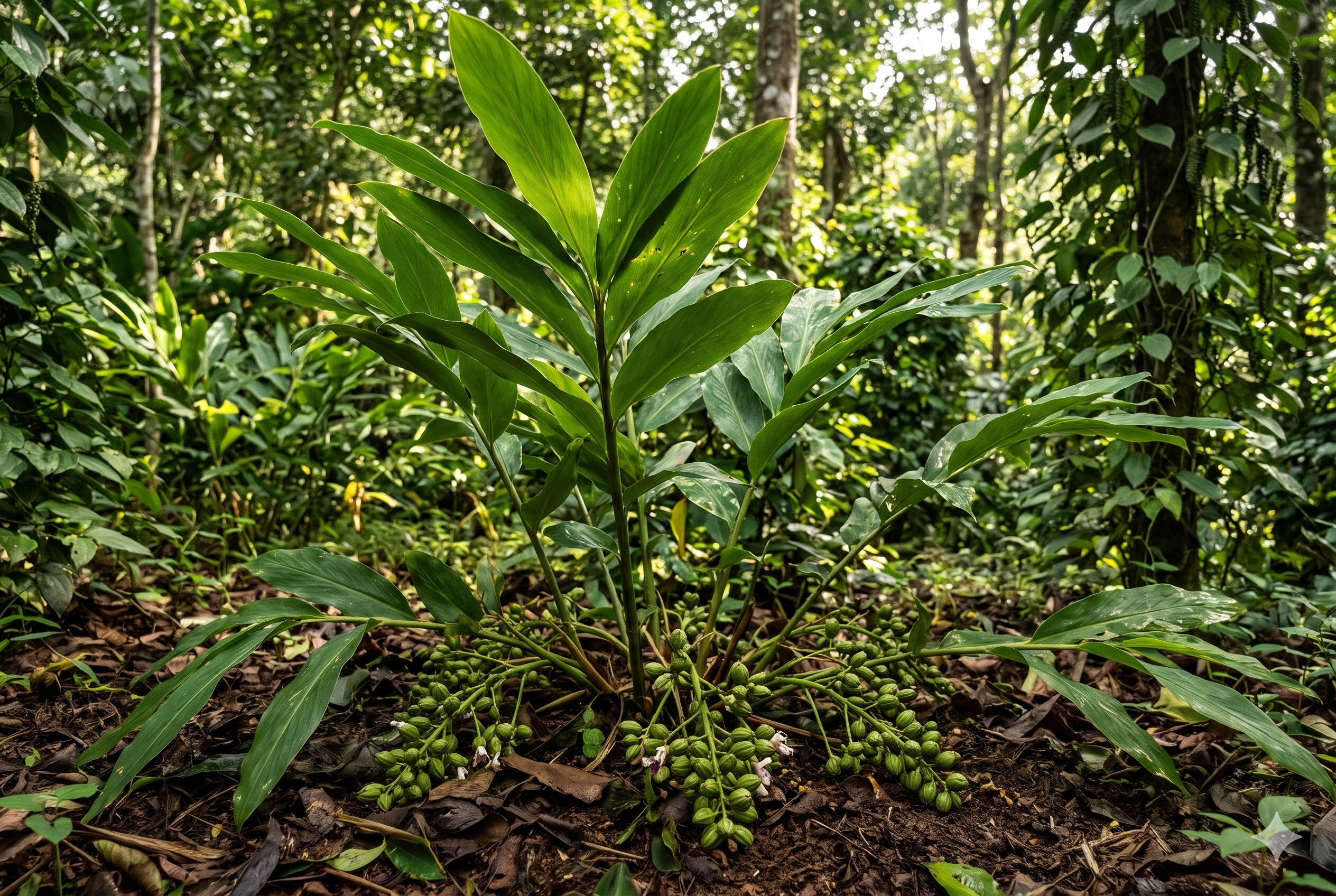
Small cardamom · Elettaria cardamomum
Look beneath the cardamom leaves
The leafy shoots are the first thing you notice. To find the spice, follow them down to the base. Separate flowering stems grow close to the ground, and the small pods develop along them. Inside each pod are the aromatic seeds you may recognise from chai or payasam.
On the walk: Ask your guide to point out a flowering stem. Follow its shape with your eyes and see how it differs from the upright shoots that carry the leaves.

Cocoa · Theobroma cacao
See where chocolate begins
Look along the trunk and older branches of a cocoa tree. This is where its tiny flowers appear and its ridged pods develop. Inside a ripe pod, pale pulp surrounds the seeds known as cocoa beans. Fermenting, drying and roasting those beans helps develop the flavour we recognise in chocolate.
On the walk: If a pod is visible, look for the point where it joins the wood. It’s a detail that is easy to miss when you first look up into the leaves.
The history behind the walk
Cardamom’s roots in the Western Ghats
Small cardamom is native to the evergreen forests of the southern Western Ghats. Its preference for shade helps explain a feature you can look for on a garden walk: a tall canopy overhead and leafy cardamom shoots growing below.
In 1978, the Cardamom Board established the Indian Cardamom Research Institute at Myladumpara in Idukki. The plant you encounter in this district is part of a regional story that connects forest habitat, spice growers and decades of research.
Make the most of your visit
What can we do in the Ayurvedic garden?
Choose two leaves you can see from the path. Compare their edges, the shape of the tip and the way the veins branch. Ask your guide for each plant’s local name. For children, try describing one leaf and letting someone else spot it. Explore more plants in the Spices & Herbs guide.
Will we see cardamom and cocoa pods during our visit?
Flowers and fruit depend on the plant’s stage of growth. If photographing pods is important to you, ask the team what is visible on your chosen date. The position of the stems, shape of the leaves and structure of the cocoa trunk are worth a closer look throughout the walk.
Can we request a guide in our language?
Request English, Malayalam, Tamil, Hindi, Telugu, Arabic, French, German or Italian when booking. Include your date, arrival time and group size so Ayurlines can confirm availability.
What should families and older visitors check?
If anyone uses a walking aid or you’re bringing a pushchair, ask about the path surface, steps and places to sit. For a late-afternoon visit, call before setting out to check the last entry time.
Can we visit the spice shop after the walk?
Yes. If a plant caught your attention, tell the team which one. They can help you recognise the spice in its kitchen form and explain what’s available that day. Browse the Spring Valley Spice Shop.
Plan your Spring Valley visit
Spring Valley P.O., KK Road, Kumily Thekkady, Kerala 685509+91 88483 48883 info@thekkadyspicegarden.com
